
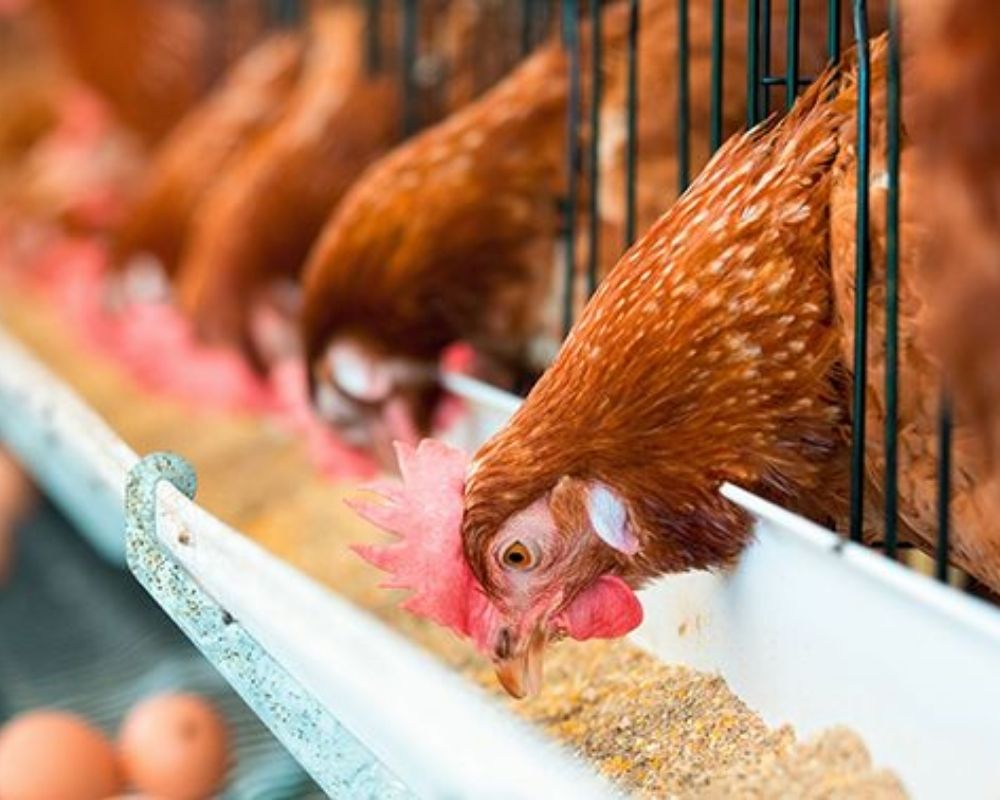
The poultry industry depends on balanced nutrition, efficient feed utilization, and consistent production performance. As poultry feed formulations become more advanced, feed enzymes are gaining importance as functional ingredients that help improve the digestion of different feed components.
Poultry feed enzymes are specialized biological catalysts used in feed formulations to break down complex nutrients into simpler forms that birds can digest and utilize more effectively. They can help address challenges associated with plant-based feed ingredients, including phytate-bound phosphorus, non-starch polysaccharides, and certain proteins.
At Shriji Exbiz Pvt. Ltd., we offer enzyme solutions for the animal feed industry, including a range of enzymes designed for different feed-processing and nutritional applications. Selecting suitable enzymes according to feed composition and production requirements can support better feed utilization and more efficient poultry nutrition.
This article explores the importance, working principles, types, applications, and benefits of poultry feed enzymes, helping feed manufacturers and poultry businesses understand their role in modern animal nutrition.
What Are Poultry Feed Enzymes?
Poultry feed enzymes are biological substances that accelerate specific chemical reactions involved in the breakdown of feed ingredients. They target particular components in feed, such as proteins, cellulose, beta-glucans, mannans, and phytate.
Many poultry diets contain ingredients such as corn, soybean meal, wheat, and other plant-based materials. Although these ingredients provide essential nutrients, some of their components may be difficult for poultry to digest completely.
Feed enzymes help break down targeted feed components, potentially improving nutrient availability and supporting digestive efficiency. Their effectiveness depends on the enzyme type, feed composition, processing conditions, dosage, and stability during feed manufacturing.
Common poultry feed enzyme solutions include protease, cellulase, beta-glucanase, mannanase, xylanase, and phytase. Each enzyme performs a different function and may be selected individually or combined with other enzymes according to the formulation.
How Do Poultry Feed Enzymes Work?
The working principle of poultry feed enzymes is based on their ability to act on specific substrates present in feed ingredients. Each enzyme targets particular chemical bonds and converts complex compounds into smaller molecules.
For example, protease breaks down proteins into smaller peptides, while phytase acts on phytate and can help release bound phosphorus. Other enzymes target plant cell-wall components that may limit nutrient accessibility.
The process generally involves the following steps:
- Enzyme incorporation: The selected enzyme is added to the poultry feed formulation at an appropriate inclusion level.
- Substrate recognition: The enzyme interacts with its specific target component in the feed.
- Component breakdown: The enzyme catalyses reactions that break down targeted molecules into simpler compounds.
- Improved nutrient accessibility: The breakdown products and released nutrients may become more available for digestion and absorption.
- Feed formulation optimization: Nutritionists evaluate the response and adjust the formulation according to nutritional requirements and performance data.
Appropriate enzyme selection and stability are essential for achieving consistent results in commercial poultry feed production.
Types of Poultry Feed Enzymes
Different enzymes serve different functions in poultry nutrition. Understanding their individual activities helps feed manufacturers select suitable solutions for their formulations.
1. Protease Enzyme
Protease breaks down proteins into smaller peptides and amino acids. It can support protein digestion and help improve the utilization of protein sources in poultry feed.
Protease selection should consider the protein ingredients used, existing enzyme activity, and the intended nutritional objectives.
2. Cellulase Enzyme
Cellulase acts on cellulose, a structural component of plant cell walls. By breaking down targeted cellulose structures, it can help improve the accessibility of certain nutrients within plant-based feed ingredients.
Its suitability depends on the raw materials and the characteristics of the feed formulation.
3. Beta-Glucanase Enzyme
Beta-glucanase breaks down beta-glucans found in certain cereal grains. In appropriate formulations, it can help reduce the effects of beta-glucans on digesta viscosity and support nutrient utilization.
It is particularly relevant when feed ingredients contain significant levels of the targeted beta-glucan substrates.
4. Mannanase Enzyme
Mannanase acts on mannan-based carbohydrates present in certain plant feed ingredients, including soybean-derived materials.
Depending on the substrate and formulation, mannanase can help break down these complex carbohydrates and support improved feed utilization.
5. Xylanase Enzyme
Xylanase breaks down xylans, including arabinoxylans found in cereal-based feed ingredients. These compounds can influence nutrient accessibility and digestive conditions.
Xylanase may be useful in formulations containing suitable cereal substrates, helping nutritionists address specific feed digestibility challenges.
6. Phytase Enzyme
Phytase breaks down phytate, a compound found in many plant-based feed ingredients that binds phosphorus and can interact with other nutrients.
By releasing some of this bound phosphorus, phytase can improve phosphorus availability and help nutritionists formulate diets more efficiently. The appropriate formulation also considers phosphorus requirements and manure nutrient management.
7. Alpha-Amylase and Other Carbohydrate-Targeting Enzymes
Amylase acts on starch and supports its breakdown into smaller carbohydrate molecules. Other enzymes, such as beta-galactosidase, target specific carbohydrate substrates.
The suitability of these enzymes depends on the feed ingredients, the target compounds, and the overall nutritional programme.
Key Benefits of Poultry Feed Enzymes
When selected and used appropriately, poultry feed enzymes can provide several formulation and nutritional advantages.
1. Improved Feed Digestibility
Enzymes break down specific complex feed components, potentially helping poultry digest targeted nutrients more efficiently.
2. Better Nutrient Availability
Certain enzymes release nutrients that are bound within feed compounds, making them more accessible for digestion and absorption.
3. Efficient Feed Utilization
Improved digestion of suitable feed components may support more effective utilization of the nutrients supplied through the diet.
4. Support for Feed Formulation
Feed enzymes can give nutritionists additional flexibility when working with plant-based raw materials and balancing dietary nutrient requirements.
5. Improved Digestive Conditions
Some carbohydrate-targeting enzymes can help reduce the impact of specific non-starch polysaccharides on digestive conditions, depending on the feed ingredients.
6. Support for Nutrient Management
Phytase can improve the availability of phytate-bound phosphorus, potentially reducing the need for some supplemental inorganic phosphorus when the diet is reformulated appropriately.
7. Application-Specific Solutions
Different enzymes can be selected according to the feed substrate, bird type, production stage, and nutritional objectives rather than relying on a single enzyme for every formulation.
Poultry Feed Enzymes: Overview
| Enzyme | Primary Function | Potential Application |
|---|---|---|
| Protease | Breaks down proteins | Protein digestion and utilization |
| Cellulase | Breaks down cellulose | Plant-based feed ingredients |
| Beta-Glucanase | Breaks down beta-glucans | Suitable cereal-based formulations |
| Mannanase | Breaks down mannan-based carbohydrates | Formulations containing mannan substrates |
| Xylanase | Breaks down xylans | Cereal-based feed formulations |
| Phytase | Breaks down phytate | Phosphorus availability |
| Alpha-Amylase | Breaks down starch | Starch digestion |
| Beta-Galactosidase | Acts on beta-galactoside substrates | Specific carbohydrate applications |
Note: Actual performance varies according to enzyme specifications, feed composition, processing conditions, inclusion rate, and formulation strategy.
Applications of Poultry Feed Enzymes
Poultry feed enzymes are used across different feed manufacturing and poultry production systems. Their application depends on the type of feed ingredient, nutritional requirements, and intended outcome.
Commercial Poultry Feed Manufacturing
Feed manufacturers incorporate suitable enzymes into formulations to address specific nutritional limitations in raw materials. Enzyme selection can help improve the utilization of targeted feed components.
Broiler Nutrition
Broiler feed formulations may use enzymes to support nutrient digestion and efficient feed utilization during rapid growth. The enzyme programme should align with the birds’ age, diet composition, and nutritional requirements.
Layer Feed Formulations
Layer diets may incorporate selected enzymes to improve the utilization of suitable feed ingredients while maintaining balanced nutrient supply throughout the laying period.
Cereal-Based Feed Formulations
Enzymes such as xylanase and beta-glucanase can be relevant when cereal ingredients contain the substrates they target. Their inclusion depends on the type and proportion of grains used.
Plant-Based Protein Feed Formulations
Protease and mannanase may be considered in formulations containing suitable plant-based protein ingredients. The selection should account for ingredient quality and the existing digestibility of the diet.
Feed Formulation and Nutrient Management
Phytase can be included in poultry diets to improve the availability of phytate-bound phosphorus. Formulators can use this information when evaluating mineral supplementation and the nutritional balance of the complete feed.
Factors to Consider When Choosing Poultry Feed Enzymes
Choosing the right poultry feed enzyme requires a clear understanding of the feed formulation and production process. The following factors can help guide the selection process.
- Feed ingredient composition: Identify the primary raw materials and the substrates they contain.
- Targeted nutritional objective: Determine whether the formulation needs support with protein digestion, carbohydrate breakdown, phosphorus availability, or another specific requirement.
- Enzyme activity: Review the declared activity units and recommended inclusion rate rather than comparing products by weight alone.
- Processing conditions: Consider pelleting temperatures, moisture, storage conditions, and enzyme stability.
- Compatibility: Evaluate how the selected enzyme performs alongside other enzymes and feed additives.
- Quality consistency: Review product specifications, batch consistency, storage requirements, and technical documentation.
- Technical support: Work with a supplier who can help assess product suitability for the intended feed application.
Why Poultry Feed Enzymes Matter in Modern Poultry Nutrition
Modern poultry production requires careful control of feed quality, nutritional balance, and production costs. Enzyme technology provides feed manufacturers with additional tools to address the limitations of certain feed ingredients.
By targeting specific components in the diet, poultry feed enzymes can support better nutrient accessibility, more flexible feed formulation, and efficient use of available raw materials.
However, enzymes are not a substitute for balanced nutrition, appropriate feed processing, or good poultry management. Their benefits depend on selecting the correct enzyme for the intended substrate and validating its performance under actual production conditions.
Shriji Exbiz Pvt. Ltd. provides enzyme solutions for the animal feed industry, with products selected according to specific industrial and feed-related applications. Working with a technically suitable enzyme solution can help feed manufacturers develop formulations that align with their operational and nutritional objectives.
Conclusion
Poultry feed enzymes play an important role in modern animal nutrition by helping break down specific feed components and improve the availability of targeted nutrients. From protease and cellulase to xylanase, mannanase, beta-glucanase, and phytase, each enzyme serves a distinct purpose in feed formulation.
Selecting the right enzyme according to feed composition, processing conditions, and nutritional objectives can help manufacturers optimize their formulations and support efficient poultry nutrition. https://www.mygov.in/
Shriji Exbiz Pvt. Ltd. offers enzyme solutions for diverse industrial applications, including the animal feed sector. For businesses looking to explore poultry feed enzyme options, choosing products with appropriate activity, consistent quality, and suitable technical support is an important step towards effective feed formulation.
Contact Shriji Exbiz to discuss enzyme solutions suited to your feed formulation and application requirements.
Frequently Asked Questions
1. What are poultry feed enzymes used for?
Poultry feed enzymes are used to break down specific feed components, potentially improving nutrient availability, digestibility, and feed formulation efficiency.
2. Which enzymes are commonly used in poultry feed?
Common options include protease, cellulase, beta-glucanase, mannanase, xylanase, phytase, and amylase. The appropriate choice depends on the feed ingredients and nutritional objectives.
3. How does phytase benefit poultry feed?
Phytase breaks down phytate and can release bound phosphorus from plant-based ingredients. This can help improve phosphorus availability and support more efficient mineral formulation.
4. Can poultry feed enzymes improve feed utilization?
Suitable enzymes can improve the digestion of targeted feed components. The resulting benefits depend on the formulation, enzyme activity, processing conditions, and inclusion rate.
5. How should feed manufacturers select an appropriate enzyme?
Manufacturers should assess raw material composition, target substrates, enzyme activity, processing stability, compatibility, and recommended inclusion levels before selecting a product.
6. Are all poultry feed enzymes suitable for every feed formulation?
No. Each enzyme acts on specific substrates. A suitable enzyme for one cereal or protein formulation may not provide the same benefits in another diet.
7. What should buyers check before purchasing poultry feed enzymes?
Buyers should review product specifications, declared enzyme activity, recommended dosage, storage requirements, technical documentation, and supplier support.
